Shrouded in mystery, steeped in depth, brimming with vitality; conversely, a harbinger of death. The sea. Civilizations before us and those yet to come have formed their own connections to the waters that nourish our being. Their interpretations of these bodies of water, passed down through story and rhyme, inform the present. From these waters we all come to be, and ultimately, through these waters, we all find peace.
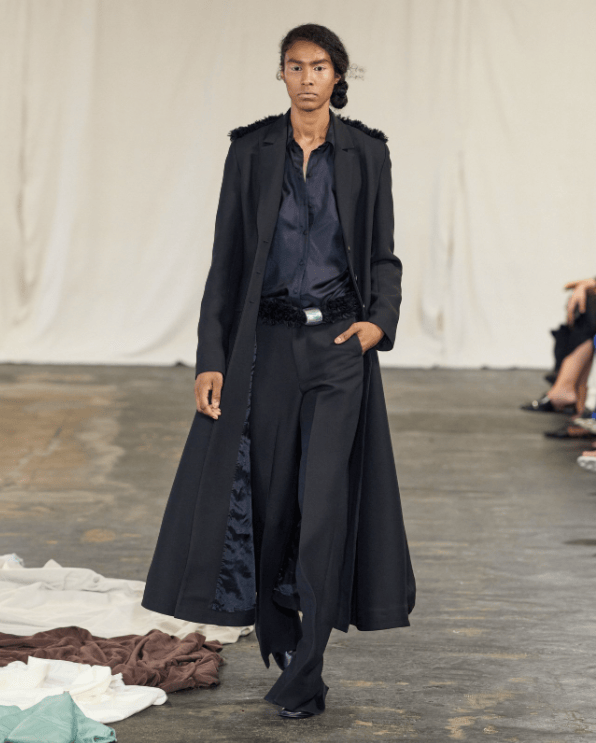
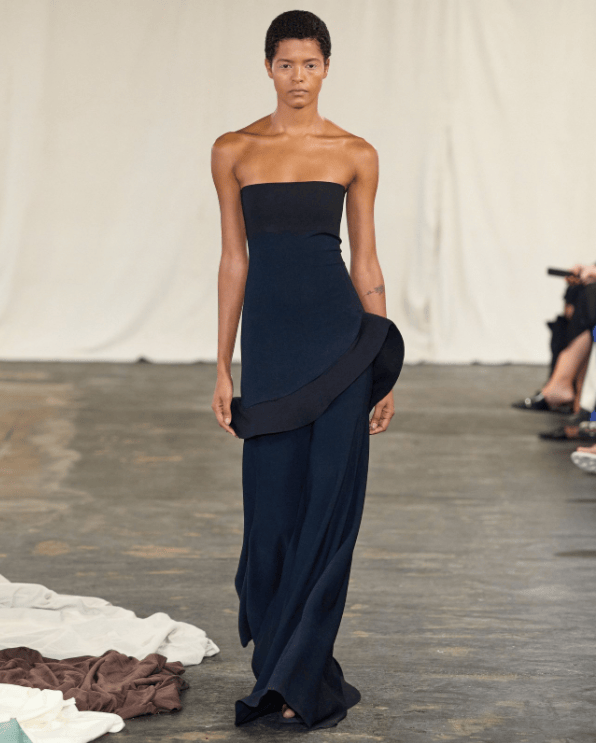
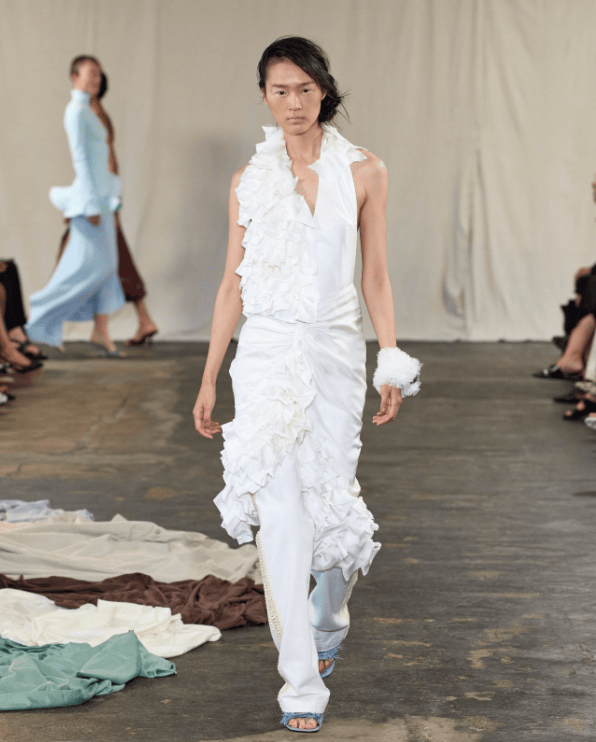
Rachel Scott returned to the water that sustained her, having been born in Jamaica and spending her youth there till college. She revisited those waters last season and experienced a wave of emotions. These emotions were born of a paradox. In her words, “this is a site where mystical and also quite awful things happen”, referring to the sea, what it provides: life, nourishment, beauty, and what it claims: death, deprivation, and horror. Through these experiences, a collection was born. Diotima Spring/Summer 2027.
At its core, Diotima Spring/Summer 2027 presents the sea and woman as bodies that resist singular definition. Both are vessels of life, beauty and mystery, while carrying histories of violence, death and transformation beneath the surface. From time immemorial, history has had a penchant for personifying vast geographical features and nature as feminine or as women themselves Scott’s consideration of women who have inhabited the Caribbean across generations becomes intertwined with the changing waters that have witnessed their lives, creating a collection that feels almost anthropological in its layering.
Through an accumulation of crochet, organza, opposing textures, changing colours and exaggerated forms, the collection captures the multifaceted nature of womanhood: nurturing yet dangerous, delicate yet imposing, rooted in history yet evolving. In this sense, the sea becomes almost a woman itself, a body capable of holding contradictions, memory, and life all at once.
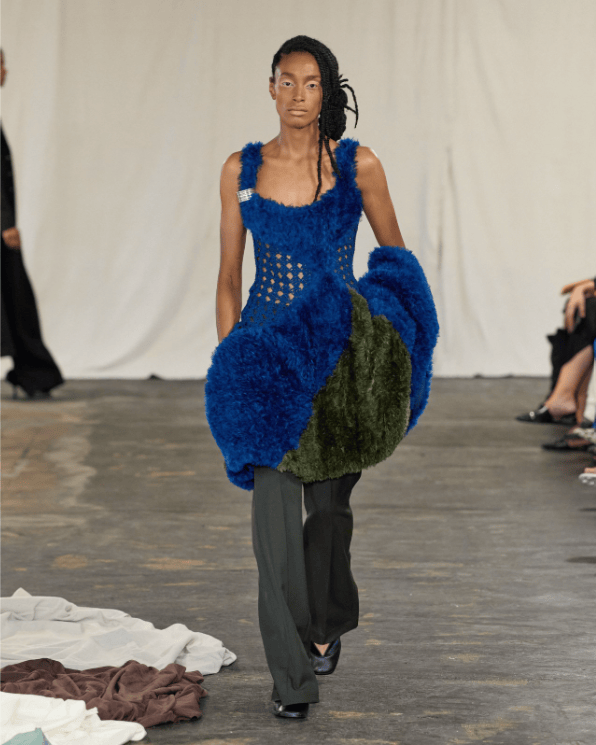
A woman in 30 lifetimes, baptized by ever-changing waters. From the first model sauntering down the runway, we see Diotima’s signature crochet technique. A geometric crochet bodice covered in contrasting blue and green fibers. It stood in opposition to the norm. Look 1 set the tone for the show, one of deliberate contradiction. Rachel mentioned that she entered this collection wanting to crush the preconceived expectations that her work could be predicted. I believe this look spoke, in a larger sense, to the untraditional woman, as Rachel spoke about the different kinds of women who had lived and experienced these Caribbean waters over time. The size of the voluminous dress spoke to a woman who takes up space.
Subsequently, the pale models walked, their looks mimicking ghosts and ghouls, but also the washed-out look of a body emerging from cold water. If the sea is, as Scott describes it, a burial ground, then these figures could be understood as more than bodies emerging from the water, they were apparitions of women who had lived, laboured, resisted and disappeared into these waters before them. The ghostly nature therefore felt less like aesthetic décor and more like an acknowledgement of memory, as though the sea could never entirely release those it had carried.
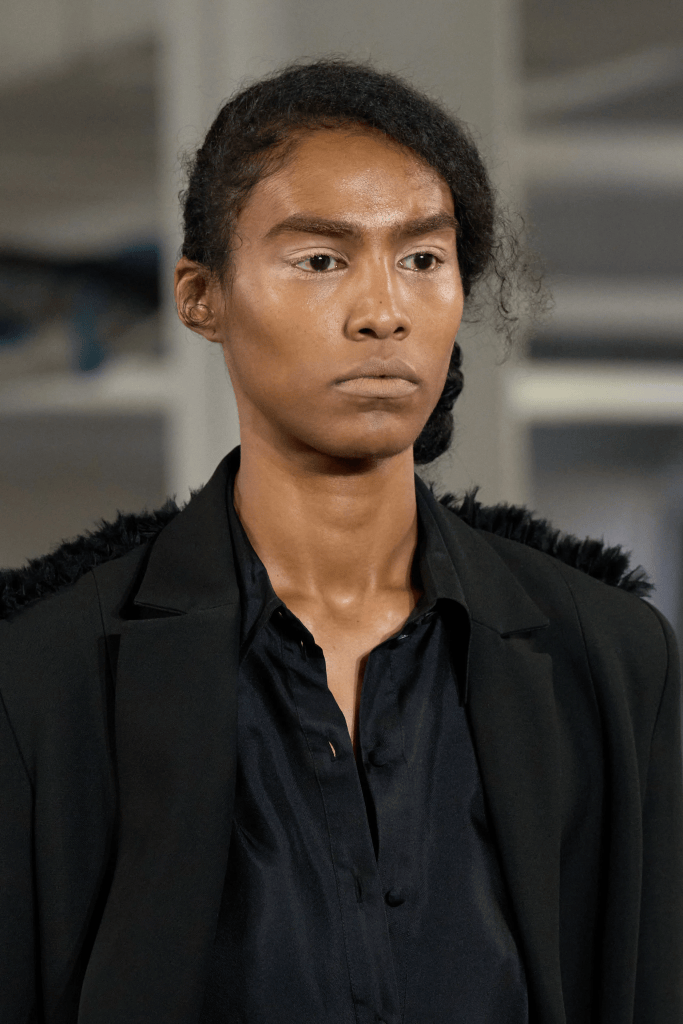
Hair was styled in a disheveled manner, as though the water took its toll on these women. Perhaps also a nod to how the passage of time changes someone. The hair suggested another consequence of immersion: time. Water alters whatever remains in it, and the women seemed similarly altered by what they had inherited from the generations before them. Fabrics clashing on garments, as we see textured fabrics seemingly attempting to take over the existing clothing. A visual representation of climate change’s impact on the sea. I interpreted cream-coloured textured fabrics on these pieces as manifestations of ocean warming, such as a bleached coral reef after a marine heatwave. While other unruly formations evoked sargassum gathering at the surface of the Caribbean waters. Look 17, a favourite of mine, is an apt representation of that process, with an accompanying crochet bodice at the sides that brought the garment come to life.
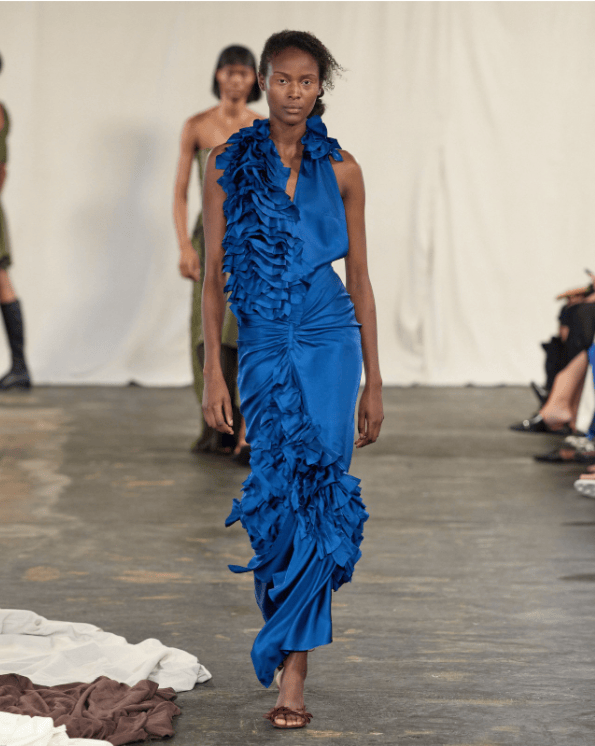
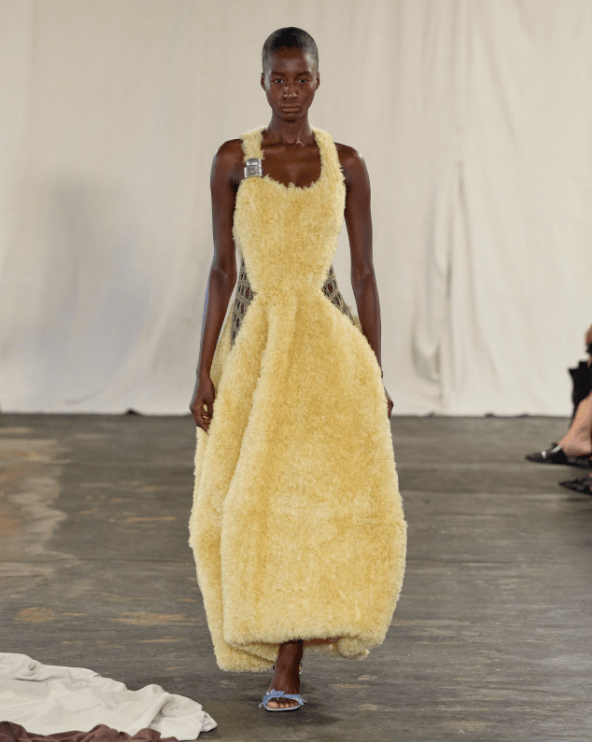
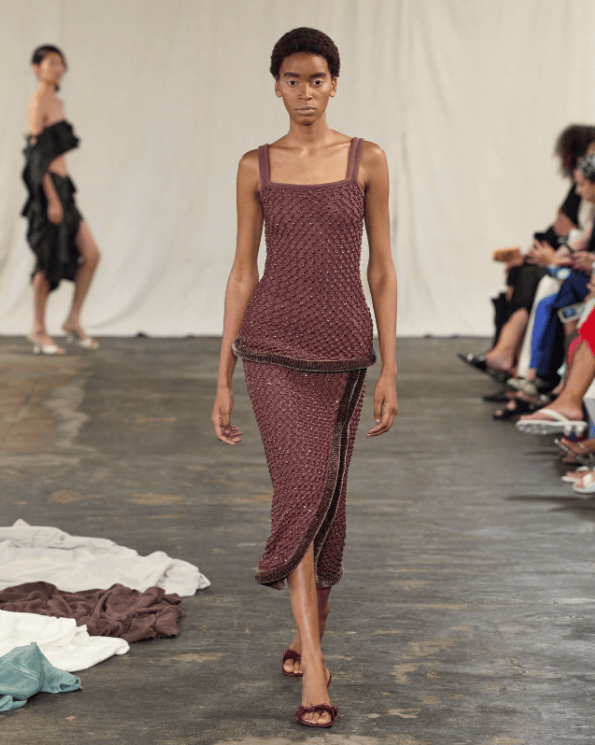
Form becomes a vehicle for meaning. Each garment within each look closely relates to an idea it intends to convey. Scott did not simply reference the sea; she translated its physical qualities into cloth. According to Rachel, organza cut up into strips appearing made dense, while crochet appeared along the sides, creating an overall image of undulating waves. These waves tell the story of the sea not through literal representation, but the physical manipulation of fabric. Likewise, we see a contrast of density, with lightweight fabric taking on visual heaviness, another indication of the multifaceted nature of both the sea and womanhood. In this sense, the clothes become the sea, while the women who inhabit them become its myriad of forms.
Experimentation seems to have taken the front seat in this collection, with emotion as its passenger. The transmutation of garments into nature and vice versa, became a recurring visual motif throughout the show. I met 30 new people in what had to be less than 30 minutes. Thirty women, thirty histories, thirty interpretations of the same water, each one embodying a different version of the sea: mystery, beauty, violence, memory. And perhaps that where Scott’s woman lies, not as one woman, but as a multitude, shifting with the tide, carrying what came before her while becoming something new. As the last woman disappeared, the sea had not been defined. It had simply taken another form.


 Zeros Domain
Leave a comment