“No.13”, titled as such being Lee McQueen’s 13th show is described as his ode to the Arts and Crafts Movement. Set as his Spring/Summer collection of 1999 comprising 75 looks and located at Gatliff Warehouse. Designs consisting of largely natural tones such as beige, tan, brown etc. Pieces hand-crafted from wood emphasizing the arts and crafts movement behind the collection. Aside from the previously stated movement that inspired the collection, we can see the themes of “Man vs. Machine” and “Art within Machine” prominently in the show.
McQueen’s work and the arts and crafts movement which inspired him throughout go hand in hand. A British-turned-world movement created as a reaction to industrialization, under the belief that there was a decline in production standards. A rejection of mass production, which during the 90s has been firmly accepted and accelerated. 75 looks all hand-crafted as if to spit in the face of fast fashion and its mass production. In other words, a rejection of the industry.
Low and accentuated waists, high collars, pinstripe designs and sheer material, all codes previously implemented by the designer. Some looks evoked feeling from me, however, they paled in comparison to the last look, look 75. The magnum opus if you will of this show. Likewise, the reason I include this collection in the same breath as his other great works.
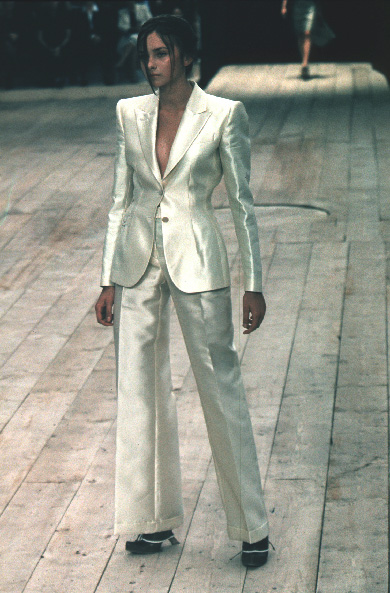
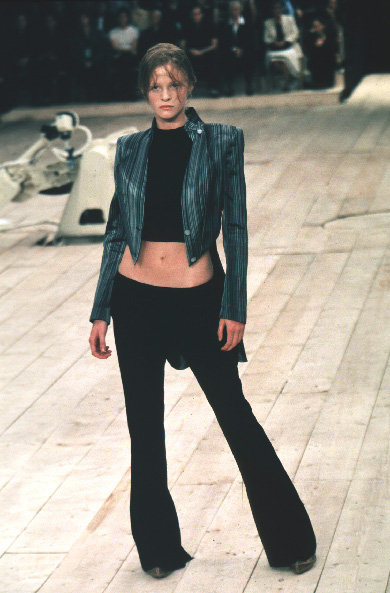
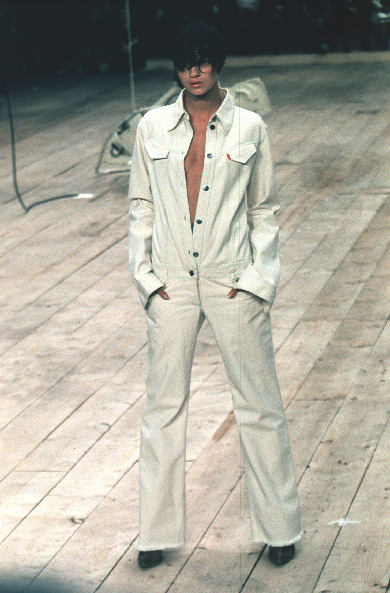
Throughout the show it’s regular business as usual which isn’t the signature of a McQueen show, especially during the 90s when performance art dominated fashion shows. There’s an effortless elegance and tranquillity amongst the models as they walk through the show unmoved. This foreboding feeling was one I felt as I watched each model walk the runway, “is this it?”, “is there anything else”. A designer who had only begun to display his brilliance in creative direction surrendering in his prime?
Suddenly, Shalom Harlow, the model of Look 75 saunters onto stage in a white trapeze dress, as pure as snow. She steps on the circular discs in between the two metal robots and is moved against her will in a circular motion between them. This ballet dancer unfolds a trance-like choreography whilst being doused in black and yellow paint. “Man vs. Machine” comes into play here. The battle of man and machine, with the outcome in favour of humanity. As if foreshadowing the rise of technology and AI in the development of human society. We see Shalom Harlow return from the platform, like a soldier out of a battlefield, she’d survived and possibly brought about a future where technology and humanity harmonize in a sort of symbiosis.
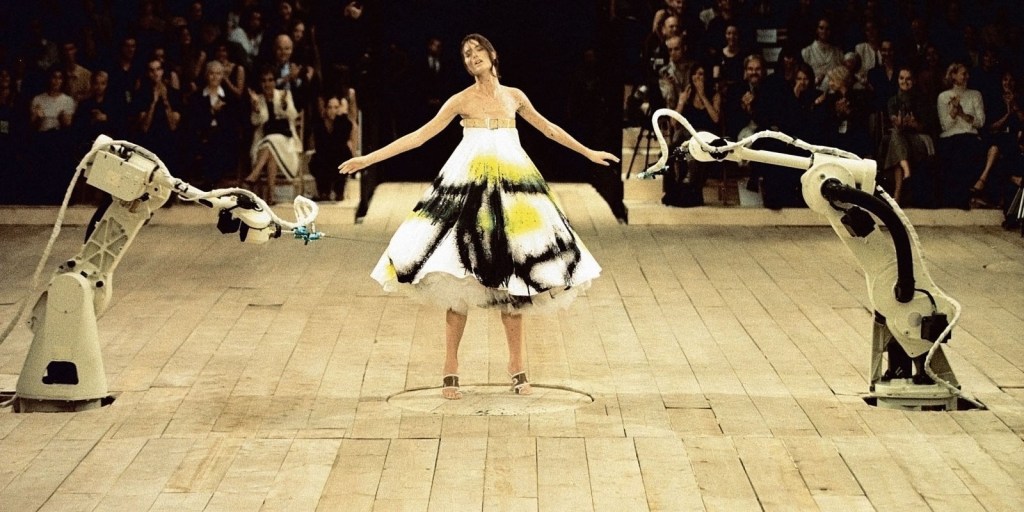
In the same manner, “Art within Machine” can also be seen in this performance. Discovering this collection 6 years ago was the closest thing to generative art I had seen within the fashion industry. In this case, the robotic machines were the artist while Shalom acted as the perfect canvas. This creation produced both unique visual and auditory experiences indicative of generative art. It is safe to say that this show in 99’ heavily impacted the fashion industry and performance art within it. With the use of robots becoming more common such as Hussein Chalayan’s S/S 07 show, Fendi’s F/W 18 show, D&G S/S 18 show etc. Similarly, brands inspired by No.13 such as Coperni pay homage by adapting their techniques to performance art as seen in their S/S 22 show.
“No.13”, acted as a kind of pandora’s box, one which has equal power to breed both good and bad. It questioned the method designers conducted their shows, the methods of manufacturing and their understanding of fashion as a form of art.


 Zeros Domain
Leave a comment